Blog
Insights on biometric identification, fraud prevention and digital identity.
What is liveness detection and why it matters
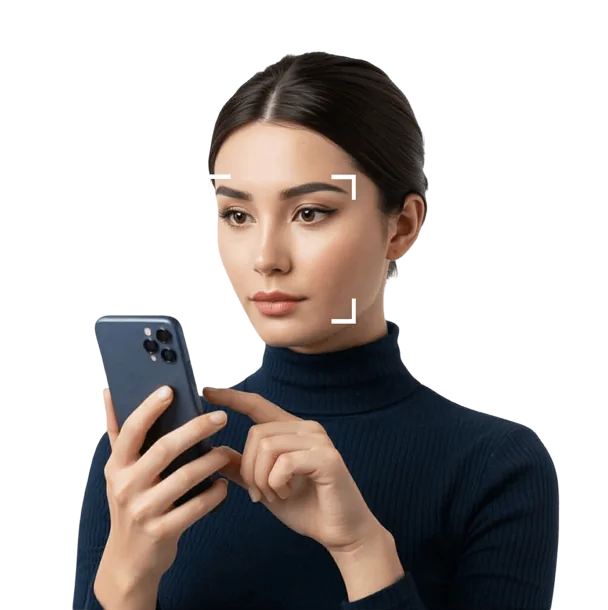
Liveness detection checks that a real, live person is in front of the camera — not a printed photo, a screen replay, a mask or a deepfake. It is the step that turns face recognition into reliable identity verification.
MyID Vision combines passive checks, which analyse texture, depth and light in a single frame, with active checks when a higher level of assurance is needed. The result arrives in seconds: honest users pass without friction, while spoofing attempts are rejected.
Biometrics vs SMS codes: which is safer for customer verification
One-time SMS codes confirm access to a phone number, not the identity of the person. SIM swaps, code interception and social engineering make them a weak link for banking and government services.
Face biometrics verifies the person directly: the face is compared with a reference photo from a trusted source, and liveness detection confirms that the person is actually present. For users it is faster than waiting for an SMS; for the business it means less fraud and fewer support requests.
Remote KYC: how to onboard customers online
Remote onboarding replaces a branch visit with a few steps in an app or on a website: the customer captures an ID document, takes a selfie, and the system confirms that the document is genuine and belongs to that person.
MyID Vision automates the biometric part of KYC/AML checks — face comparison (1:1), search in a database (1:N) and liveness detection — and integrates via API. This shortens onboarding from days to minutes and helps meet KYC/AML requirements.
How to choose a face recognition vendor: 5 questions to ask
Before choosing a biometric provider, ask: How accurate is the algorithm on real-world data, not only in the lab? Which spoofing attacks does its liveness detection stop? How long does one check take under peak load?
Two more questions matter for integration and compliance: Is there a documented API or SDK for web and mobile? Where are biometric data stored and processed? The MyID Vision team is ready to answer each of them during a demo.
MyID Palm: paying for the metro with your palm
MyID Palm lets passengers pass through turnstiles with a palm scan — no cards, tokens or QR codes. Identification takes a moment, which reduces queues and speeds up passenger flow at peak hours.
The solution integrates with existing ticketing infrastructure and reduces fare fraud, since a palm cannot be handed to another person like a card. It is a good example of how biometrics makes everyday city services faster and more secure.